
The greatest bottleneck to scaling utility solar in densely populated states like Uttar Pradesh is land acquisition. Purchasing 500 acres of contiguous, shadow-free land often delays projects by years and inflates capital expenditures immensely. The engineering solution to this geographical crisis lies not on land, but on water. Welcome to the era of Floating Solar Photovoltaics (FPV).
By utilizing the vast, underutilized surfaces of man-made reservoirs, irrigation canals, and industrial water treatment ponds, Newtech Group's civil division is deploying FPV systems that bypass land costs entirely while delivering superior thermodynamic efficiencies.
Key FPV Civil Engineering Takeaways:
- Zero Land Cost: Utilizing existing reservoirs eliminates the costly and time-consuming process of land acquisition.
- Thermodynamic Cooling: The water body acts as a natural heat sink, lowering panel temperatures and boosting power generation by up to 15%.
- Water Conservation: The massive pontoon arrays shade the reservoir, drastically reducing water evaporation in arid climates.
The Mechanics of High-Density Pontoons
Building a solar farm on water presents unique structural challenges. Standard HDG steel mounting structures are too heavy and susceptible to aquatic corrosion. Instead, FPV systems utilize modular, interlocking floats known as pontoons, typically blow-molded from High-Density Polyethylene (HDPE).
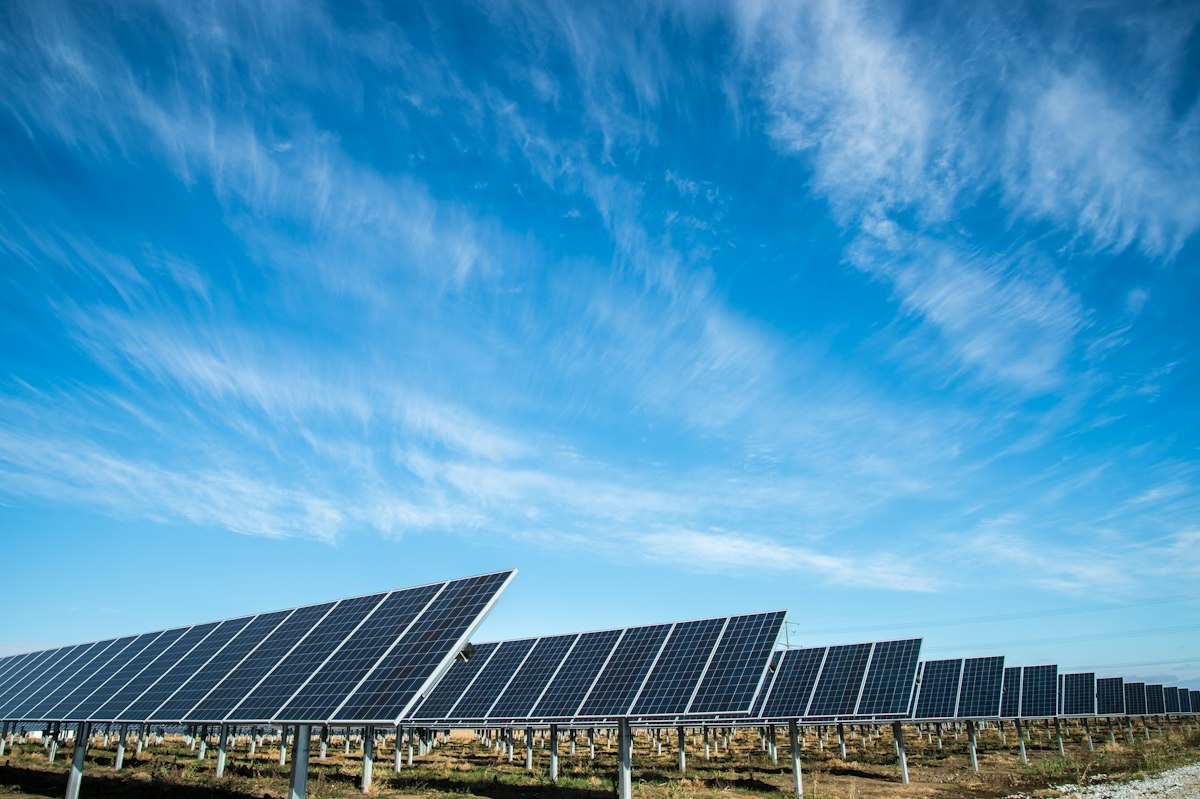
These pontoons must be UV-resistant and capable of bearing the combined weight of the solar modules, the DC cabling, and the maintenance personnel who walk the integrated floating walkways. The true civil engineering challenge, however, lies beneath the surface: the mooring system. The entire massive, floating "island" must be anchored to the reservoir bed or the shoreline using elastic mooring lines that can absorb extreme wind shears and fluctuate safely with changing seasonal water levels.
The Natural Heat Sink Effect
Solar panels have a negative temperature coefficient. As they get hotter under the midday sun, their voltage drops, and they become less efficient at generating electricity. This is a severe problem in central India, where ambient temperatures regularly exceed 45°C in the summer.
When installed on water, the reservoir acts as a massive natural heat sink. The evaporative cooling effect from the water surface continuously draws heat away from the rear of the solar modules. Our data models indicate that FPV arrays operate significantly cooler than their ground-mounted counterparts, leading to a generation boost of between 10% and 15% annually.
A Dual-Purpose Environmental Benefit
The benefits of FPV are fully reciprocal. While the water cools the solar panels, the solar panels shade the water. By covering a significant portion of a reservoir with an FPV array, we drastically reduce the surface area exposed to direct sunlight and wind, slashing water evaporation rates. In drought-prone regions, this conservation of municipal or agricultural water supplies is a massive, unquantifiable secondary benefit.